The Organic Defense
When aphids attack your prize roses or mealybugs cover your hibiscus, the immediate temptation is to reach for a harsh chemical pesticide. However, these chemicals indiscriminately kill beneficial insects (like bees and ladybugs), contaminate your soil, and are hazardous to pets and children. In this 800-word guide, we share five incredibly effective, completely organic pest control recipes using ingredients you already have in your Indian kitchen.
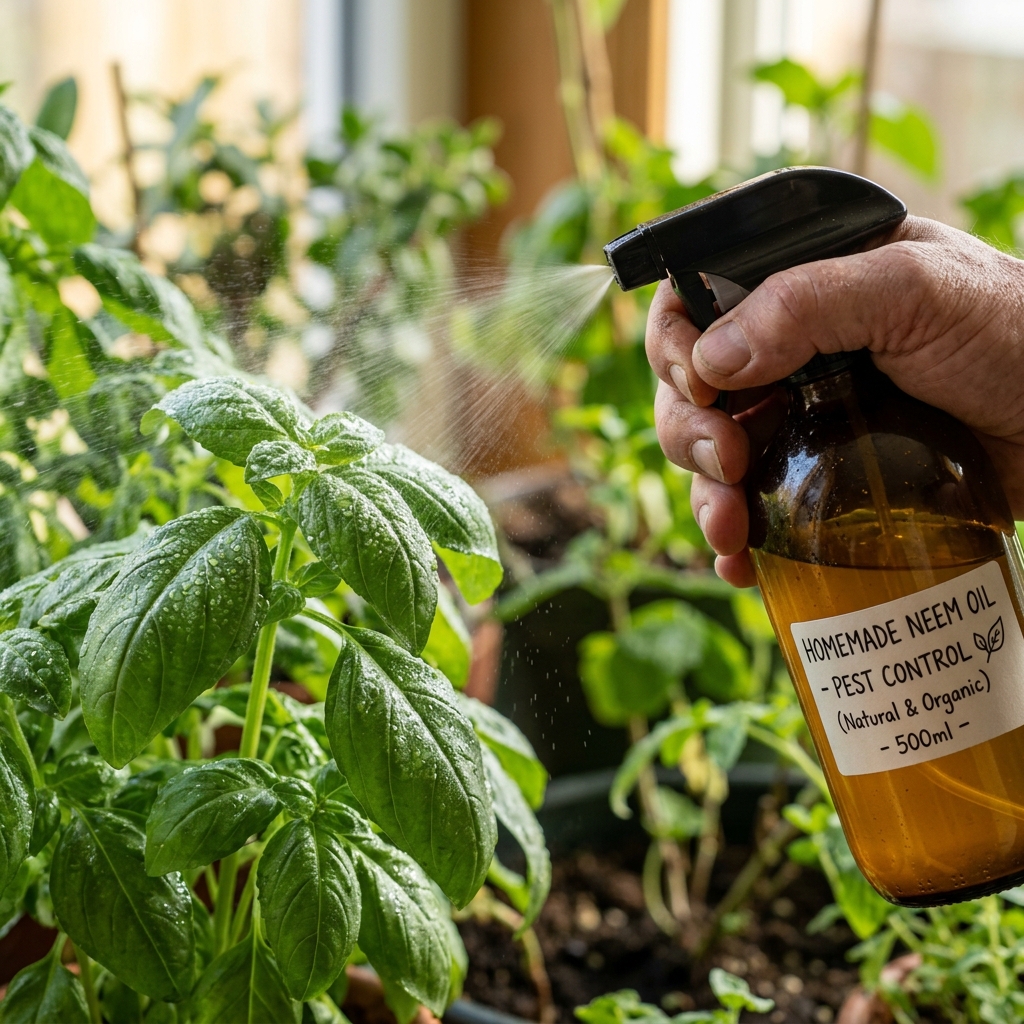
1. The Miracle Neem Oil Spray
Neem oil is the undisputed king of organic pest control. It contains Azadirachtin, a compound that disrupts the hormonal cycle of pests, causing them to stop feeding and reproducing. It is highly effective against aphids, mealybugs, whiteflies, and even fungal issues like powdery mildew.
The Recipe: Mix 1 teaspoon of pure, cold-pressed Neem oil and 1/2 teaspoon of mild liquid dish soap (the soap acts as an emulsifier to mix the oil with water) into 1 liter of warm water. Shake vigorously in a spray bottle. Spray the plants thoroughly, ensuring you coat the undersides of the leaves where pests hide. Apply this preventatively every 15 days, or every 5 days for an active infestation.
2. The Garlic and Chilli Heat Wave
Insects hate strong, pungent odors and the burning sensation of capsaicin found in chillies. This spray is a powerful repellent against leaf-eating caterpillars, beetles, and spider mites.
The Recipe: Blend 1 whole head of garlic (cloves peeled) and 3-4 spicy green chillies with a cup of water until it forms a smooth paste. Let this paste steep overnight. The next day, strain the liquid through a fine cloth, squeezing out all the juices. Mix this concentrated liquid into 1 liter of water, add a few drops of liquid soap to help it stick to the leaves, and spray. Note: Wear gloves and avoid touching your eyes when handling this potent mixture!
3. The Simple Soap Spray
For soft-bodied insects like aphids and whiteflies, a simple soap spray is highly lethal. The soap breaks down the waxy protective coating on the insect's exterior, causing them to dehydrate and die rapidly.
The Recipe: Mix 1 tablespoon of pure, mild liquid soap (Castile soap or a very gentle, additive-free dish soap) into 1 liter of water. Spray directly onto the pests. Do not spray during the heat of the day, as the sun combined with the soap can burn the plant's leaves. Always spray in the early evening.
4. Wood Ash for Slugs and Snails
During the Indian monsoon, slugs and snails can decimate young seedlings overnight. Wood ash acts as an incredible physical barrier. The ash is highly alkaline and acts as a desiccant, drying out the slimy bodies of slugs if they try to cross it.
The Recipe: There is no mixing required. Simply collect clean wood ash (do not use charcoal briquette ash that contains chemical lighter fluid) and sprinkle a continuous ring around the base of your vulnerable plants. You will need to reapply the ash after heavy rain.
5. The Baking Soda Fungicide
In high humidity, fungal infections like powdery mildew (which looks like a white dusting of flour on the leaves) are common. Baking soda changes the pH of the leaf surface, making it inhospitable for fungal spores to survive.
The Recipe: Mix 1 tablespoon of baking soda and 1/2 teaspoon of liquid soap into 1 liter of water. Spray the affected plants thoroughly. Be cautious: test this on a small leaf first, as some sensitive plants may react poorly to the sodium.
Conclusion
By utilizing these simple, safe, and inexpensive kitchen remedies, you can protect your garden from pests and diseases without introducing dangerous toxins into your home ecosystem. Organic gardening requires patience and consistency, but the reward is a truly healthy, thriving, and safe green space.