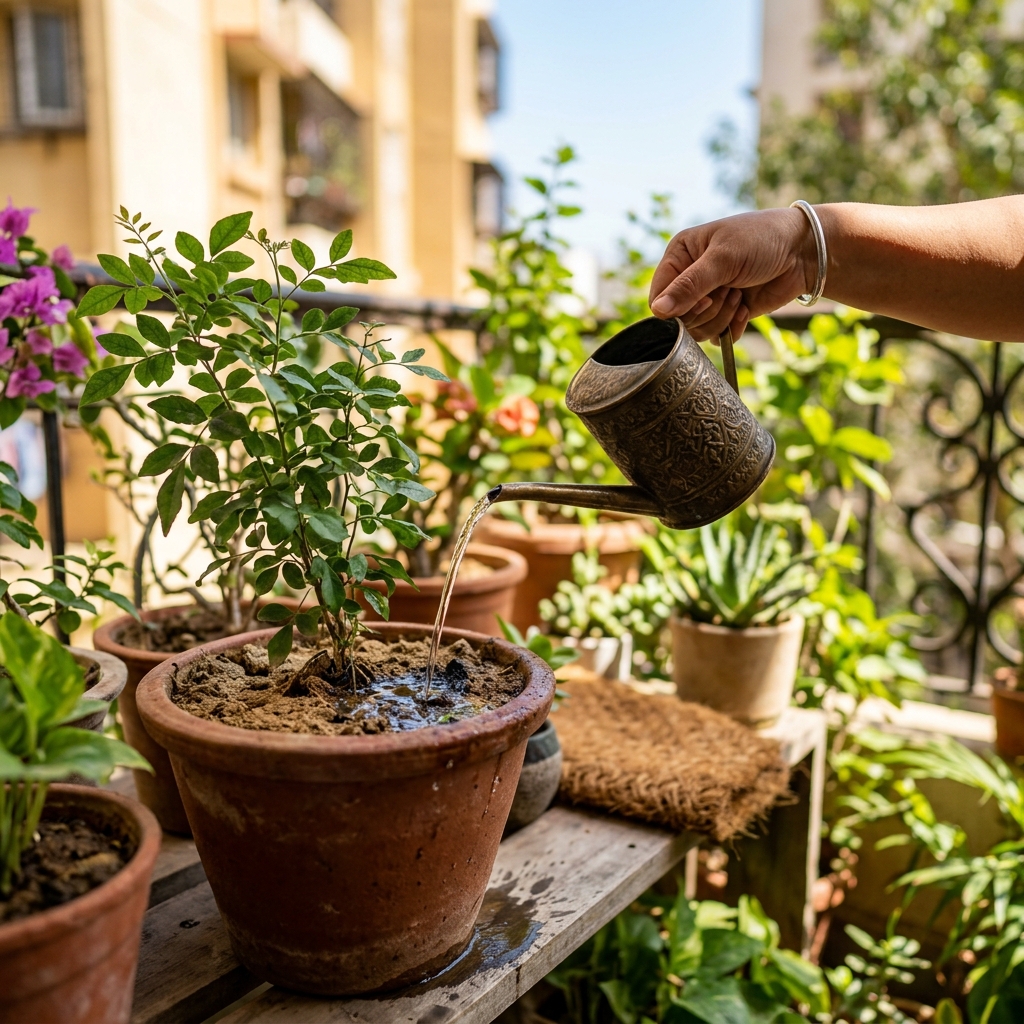
The Magic of Monsoon Water
If you have ever noticed how your garden explodes with vibrant, lush green growth after the first monsoon rain, it isn't an illusion. Rainwater is soft, slightly acidic, and completely free of the harsh chlorines, fluorides, and heavy salts found in municipal tap water or hard borewell water. Furthermore, as rain falls through the atmosphere, it picks up dissolved nitrogen, acting as a mild, natural fertilizer. In this 800-word guide, we explore how even apartment dwellers can harvest this precious resource.
Why Tap Water is Harming Your Plants
In many Indian cities, the water supplied to apartments is highly treated or pulled from deep, mineral-heavy borewells. Over time, these dissolved salts (calcium and magnesium) build up in the confined soil of your potted plants, forming a crusty white layer on the topsoil and burning the delicate root tips. Rainwater acts as a crucial flush, dissolving and washing away these built-up toxins.
The Balcony Catchment System
While you cannot install a 10,000-liter underground tank in an apartment, you can absolutely capture enough rainwater to sustain your balcony garden for several weeks or months post-monsoon.
The simplest method is the "Direct Catchment." During a heavy downpour, place every large bucket, tub, and wide-mouthed container you own on the edge of the balcony. However, this is inefficient. To drastically increase your yield, you need to utilize surface area.
The Tarp and Funnel Method
This is a temporary, highly effective setup for a balcony. Secure a clean, large plastic tarp or heavy plastic sheet to the balcony grill, angling it slightly downwards towards the inside of the balcony. Place a large, heavy-duty storage drum (50 to 100 liters) beneath the lowest point of the tarp. Weigh the center of the tarp down slightly so the water naturally funnels directly into the drum.
Make sure to wash the tarp before the monsoon begins. Allow the first rain of the season (the "first flush") to wash the dust and pollution out of the air and off the tarp before you start collecting the water.
Storage and Mosquito Prevention
Collecting the water is easy; storing it safely is the challenge. Stagnant rainwater is the perfect breeding ground for Dengue and Malaria-carrying mosquitoes. Your storage drum must have a tight-fitting, completely sealed lid.
To be absolutely safe, stretch a piece of fine mosquito netting or muslin cloth over the mouth of the drum before securing the lid. This acts as a filter for debris and an impenetrable barrier for mosquitoes. Keep the drum in the shadiest, coolest corner of the balcony to prevent algae growth (algae requires sunlight to grow).
Using the Harvested Water
Use this premium rainwater strategically. Prioritize it for your most sensitive, expensive, or struggling plants. Calatheas, Orchids, Carnivorous plants, and Ferns absolutely demand soft water and will show immediate improvement when switched to rainwater.
If you have a limited supply, use the rainwater primarily for foliar spraying (misting the leaves) and use filtered tap water for the soil.
The Overflow Bypass
During intense Indian monsoon squalls, a 50-liter drum can fill up in a matter of minutes. Ensure you have an overflow plan. If you are using the tarp method, be prepared to quickly unhook it or redirect the funnel into a drain to prevent flooding your balcony and ruining your floors.
Conclusion
Every drop of rainwater that hits your balcony and washes down the drain is a missed opportunity. By setting up a simple, temporary catchment system, you can provide your potted urban jungle with the purest, most nourishing water nature has to offer, drastically improving their health while doing your small part for water conservation.