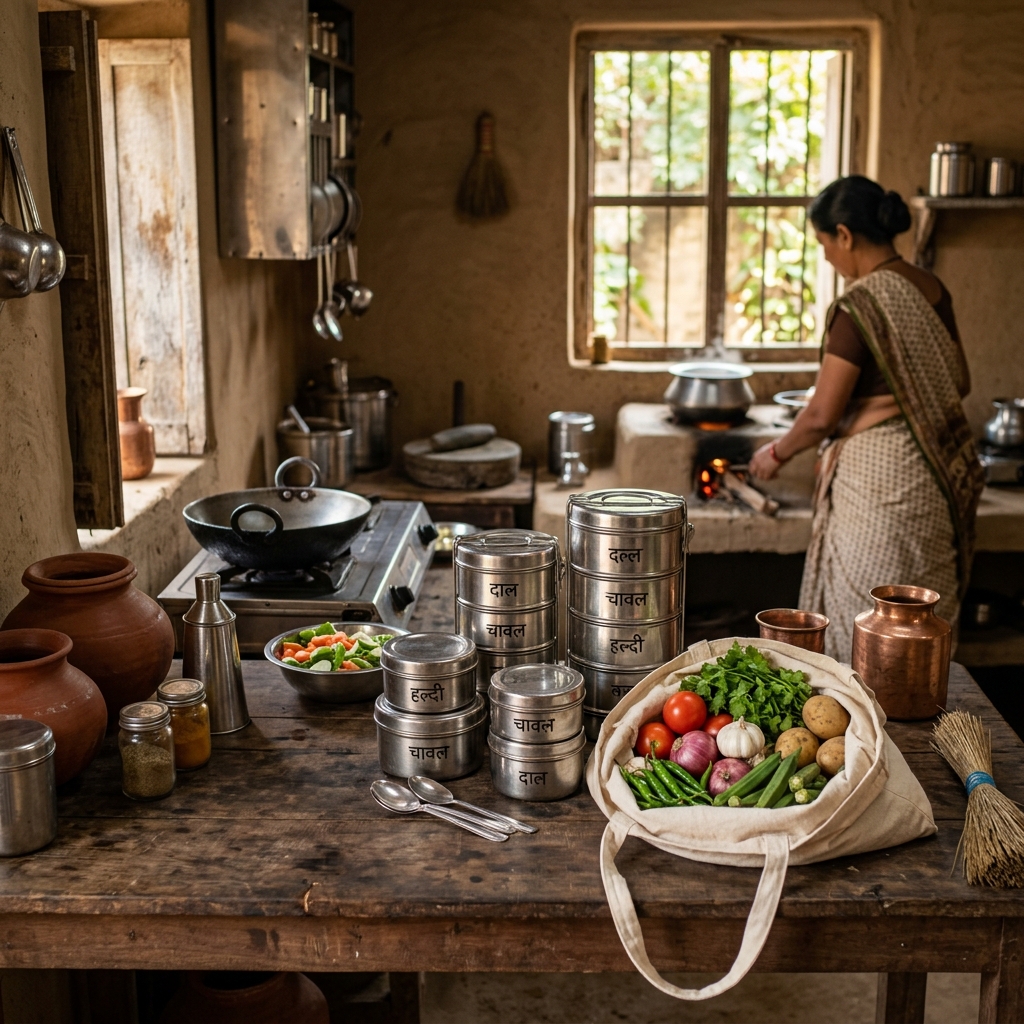
The Traditional Indian Advantage
The concept of "zero waste" is currently a massive global trend, but if you look closely at traditional Indian households, the philosophy is deeply embedded in our culture. Our grandparents didn't know the term "zero waste," but they practiced it daily. They reused glass jars for pickles, repurposed old cotton sarees into dusting cloths, and fed kitchen scraps to the local cows. Transitioning to a modern zero-waste lifestyle in India is less about learning new habits and more about remembering old ones.
1. The Kitchen Audit
The kitchen is the heart of the home, and unfortunately, the primary source of single-use plastic waste. Start by auditing your weekly trash. You will likely find it dominated by plastic packaging from groceries, delivery containers, and wet organic waste.
The solution? Buy in bulk from local kirana stores. Take your own cloth bags and stainless-steel containers (dabbas) to the local mandi or grocery store. Grains, pulses, and spices can easily be bought package-free. By simply refusing pre-packaged supermarket produce, you cut out a massive portion of your household waste.
2. Composting is Non-Negotiable
Over 60% of an average Indian household's waste is organic wet waste (vegetable peels, tea leaves, leftover food). When this waste is tied up in plastic bags and sent to massive landfills (like Ghazipur in Delhi), it decomposes anaerobically, releasing methane—a greenhouse gas 25 times more potent than CO2.
By starting a simple aerobic terracotta composter on your balcony, you completely remove this burden from the municipality. Within two months, this "waste" transforms into incredibly rich, dark compost, turning a massive environmental problem into free fertilizer for your garden.
3. Ditch the Liquid Cleaners
Take a look under your sink. You probably have five different plastic bottles of brightly colored liquid chemicals—one for the floor, one for the glass, one for the toilet. These are 90% water shipped in single-use plastic.
Switch to traditional, natural alternatives. Bio-enzymes (made by fermenting citrus peels with jaggery and water) are miraculous, chemical-free all-purpose cleaners. Soapnuts (reetha) can be boiled to create a natural, plastic-free laundry detergent and dishwashing liquid that is completely safe to drain into the soil.
4. The Hygiene Revolution
Personal hygiene products generate a shocking amount of unrecyclable plastic waste. A simple toothbrush takes 400 years to decompose. Switching to a bamboo toothbrush is the easiest zero-waste swap you can make.
Furthermore, liquid body washes and shampoos in plastic bottles can be easily replaced with high-quality, cold-pressed solid soap bars and shampoo bars. Not only do they eliminate plastic packaging, but they are also free of harsh sulfates and parabens.
5. The Power of "No"
The most important step in the zero-waste pyramid is not "Recycle," but "Refuse." Refuse the plastic straw at the local juice vendor. Refuse the plastic carry bag when you buy medicines. Refuse the free promotional plastic junk that you don't need.
Carry a simple zero-waste kit in your backpack or purse: a stainless-steel water bottle, a cloth tote bag, a reusable coffee cup, and a basic steel spoon. This small kit alone will prevent hundreds of pieces of single-use plastic from entering the ecosystem every year.
Conclusion
Zero waste is not about perfectly fitting all your trash for a year into a tiny glass jar. It is about making better, more conscious decisions every day. By returning to the mindful, resource-respecting practices of our grandparents, we can drastically reduce our footprint and create a healthier environment for the future.