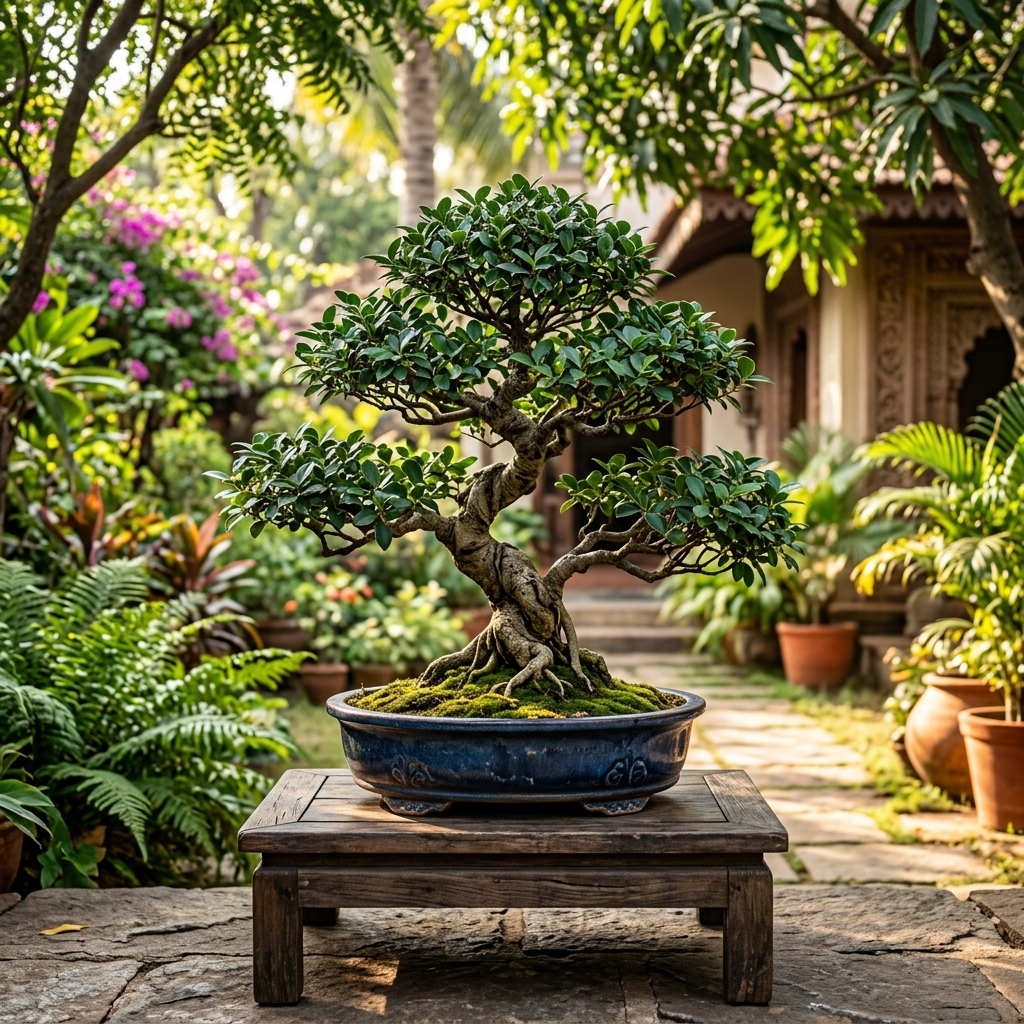
The Ancient Art of Miniature Trees
Bonsai is not just gardening; it is an art form, a philosophy, and a lifelong practice of patience. While the practice originated in East Asia, the diverse climates of India offer a unique opportunity to cultivate a wide variety of bonsai species. In this comprehensive 800-word guide, we will explore everything you need to know about starting and maintaining your own bonsai collection in India.
Choosing the Right Species for India
The first and most crucial step in your bonsai journey is selecting a tree species that will thrive in your local climate. India's weather ranges from the extreme heat of the northern plains to the humid coastal regions and temperate hill stations. Therefore, importing exotic temperate species like Japanese Maples or Pines can often end in heartbreak.
Instead, focus on indigenous and highly adaptable species. The Ficus family is arguably the best starting point for beginners. Ficus benjamina (Weeping Fig), Ficus retusa, and Ficus microcarpa are incredibly resilient, forgiving of pruning mistakes, and love the Indian heat and humidity. Other excellent choices for the Indian climate include the Jade plant (Portulacaria afra), Bougainvillea, Adenium (Desert Rose), and the beautiful flowering Carmona (Fukien Tea).
Soil and Potting Dynamics
Unlike regular potted plants, bonsai trees live in very shallow containers with a minimal amount of soil. This means the soil you use must perform exceptionally well. Regular garden soil (laal mitti) is a strict no-go for bonsai, as it compacts easily, preventing roots from breathing and causing waterlogging.
A proper bonsai soil mix must strike a delicate balance between water retention and drainage. A standard mix suitable for most Indian climates consists of 50% inorganic material (like pumice, perlite, or crushed brick/terracotta) and 50% organic material (like composted bark or high-quality potting soil). The inorganic components ensure that water drains quickly and air can reach the roots, while the organic components hold onto moisture and nutrients.
The Art of Pruning and Wiring
Pruning is how you maintain the miniature size of your bonsai and shape its canopy. There are two main types of pruning: maintenance pruning and structural pruning.
Maintenance pruning is done regularly throughout the growing season (spring and monsoon in India). It involves pinching back new growth to encourage the tree to branch out, creating a denser, more refined canopy. Never let the shoots grow too long, or the inner branches will die off due to lack of sunlight.
Structural pruning is more drastic and is usually done in the late winter just before the spring growth flush. This involves removing larger branches to define the primary shape and style of the tree—be it informal upright, slanting, cascading, or windswept.
Wiring is the technique used to bend and position branches. By carefully wrapping anodized aluminum or annealed copper wire around a branch, you can bend it into the desired position. The branch will eventually set in this position, and the wire must be removed before it cuts into the growing bark.
Watering: The Hardest Skill to Learn
Ask any bonsai master, and they will tell you that watering is the most difficult skill to master. In the scorching Indian summer, a small shallow bonsai pot can dry out in a matter of hours. During the peak heat, you may need to water your bonsai twice a day—once in the early morning and once in the late afternoon.
The golden rule is: never water on a strict schedule. Always check the soil. Dig your finger about a centimeter into the soil. If it feels dry, it is time to water. When you do water, water thoroughly until it runs out of the drainage holes at the bottom of the pot. This ensures that the entire root ball is saturated and flushes out any built-up salts from fertilizers.
Feeding Your Miniature Tree
Because bonsai trees live in a small volume of soil that is constantly being flushed with water, nutrients are depleted very quickly. Regular fertilization is absolutely essential during the growing season.
Use a balanced liquid fertilizer (like an NPK 20-20-20) diluted to half the recommended strength, applied every two weeks from spring through the monsoon. Alternatively, you can use slow-release organic fertilizers (like mustard cake powder or seaweed extract), which provide a steady stream of nutrients without the risk of burning the delicate roots.
Pest Management in the Tropics
The warm, humid Indian climate is a breeding ground for pests. Spider mites, aphids, mealybugs, and scale insects can quickly decimate a small bonsai. Inspect your trees weekly, looking closely under the leaves and at the branch junctions.
At the first sign of pests, intervene immediately. A gentle spray of diluted neem oil mixed with a few drops of mild liquid soap is an excellent organic preventative and treatment. For severe infestations, you may need to resort to specific horticultural oils or systemic insecticides.
Conclusion
Growing a bonsai is a journey, not a destination. It requires daily observation, patience, and a willingness to learn from the tree itself. By choosing the right species for the Indian climate, mastering your watering technique, and applying diligent pruning and feeding, you can cultivate a stunning, living piece of art that will bring peace and beauty to your home for decades to come.