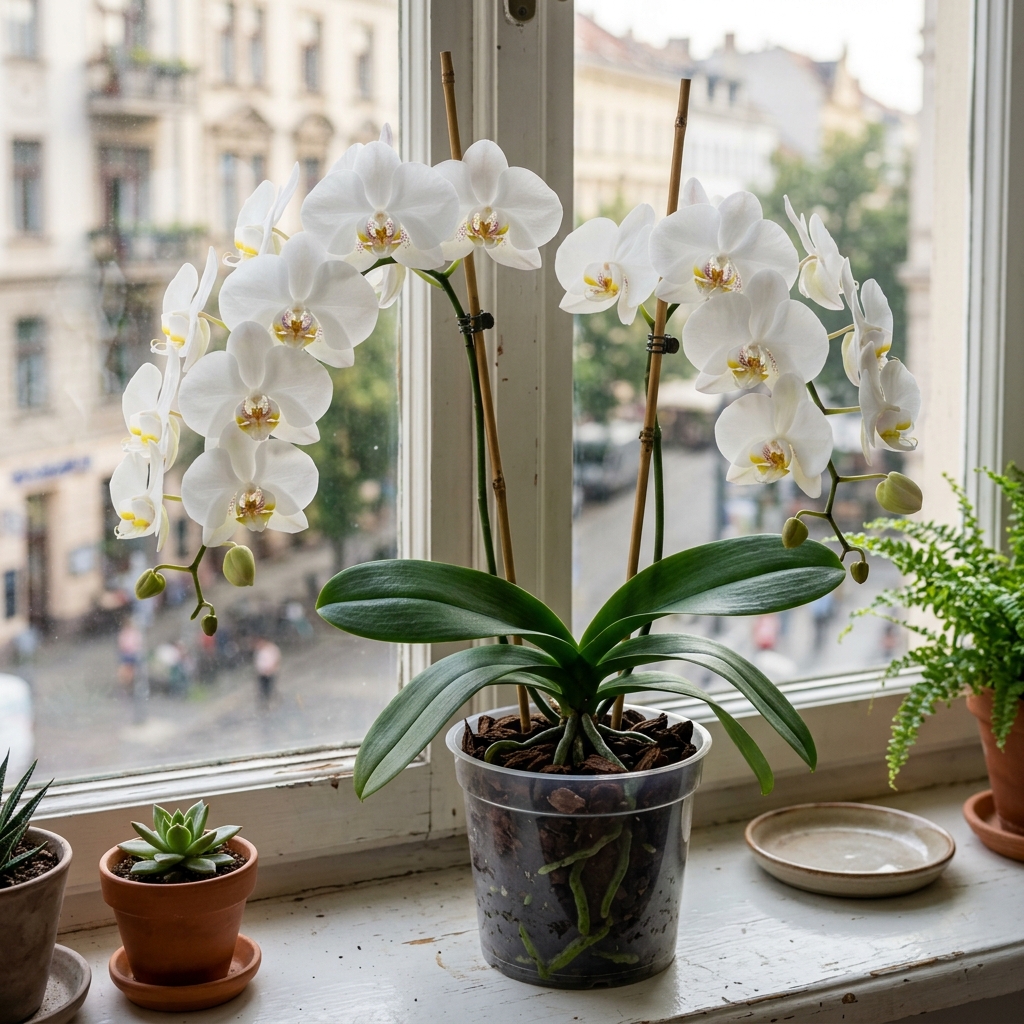
The Elegance of the Moth Orchid
Phalaenopsis, commonly known as the Moth Orchid, is the undisputed queen of indoor ornamental plants. Their arching sprays of massive, elegant, long-lasting flowers make them a premium gift and a staple in modern home decor. However, across India, they share a common tragic fate: they are bought in full bloom, enjoyed for two months, and then slowly decline and die once the flowers drop. But it doesn't have to be this way. In this 800-word guide, we will demystify orchid care and teach you the exact steps to keep your Phalaenopsis thriving and blooming year after year in your apartment.
Understanding Their Natural Habitat
To care for an orchid, you must understand where it comes from. Phalaenopsis are epiphytes. In the dense, tropical jungles of Southeast Asia, they do not grow in dirt. Instead, they cling to the bark of trees high up in the canopy. Their thick, silvery roots are exposed to the air, absorbing moisture from the humid jungle atmosphere and frequent rain showers, while being shielded from direct, burning sunlight by the leaves above.
Therefore, the quickest way to kill an orchid is to plant it in regular potting soil. They will literally suffocate and rot.
The Right Potting Medium and Container
Orchids must be grown in an extremely airy, loose medium. The two most common and effective media are coarse pine bark chips or sphagnum moss (or a mixture of both). Pine bark mimics their natural tree-trunk habitat, providing excellent airflow and rapid drainage. Sphagnum moss holds moisture longer, which is great for the dry Indian summers, but it requires careful watering to avoid root rot.
Always use a clear plastic pot with plenty of drainage holes (and ideally, slits on the sides). A clear pot allows you to see the roots, which is the primary way you gauge when to water. The roots themselves also photosynthesize, so exposing them to light is beneficial.
The Art of Watering Orchids
Overwatering is the number one killer of indoor orchids. Forget the "ice cube trick"—orchids are tropical plants, and ice will shock their roots. Instead, rely on visual cues from the roots.
Look through the clear plastic pot. If the roots are a bright, plump green, the plant is hydrated. Do not water. When the roots turn a silvery-grey or whiteish color, it is time to water. Take the plastic pot to the sink and run room-temperature water copiously over the bark/moss for about a minute. Let it drain completely for 15 minutes before placing it back in its decorative outer pot. An orchid should never sit in a puddle of standing water.
Also, ensure absolutely no water pools in the "crown" (the top center where the leaves emerge). Crown rot is deadly and acts quickly. If water gets in there, dab it out gently with a paper towel.
Light and Temperature Requirements
Phalaenopsis require bright, indirect light. Direct Indian sunlight will scorch their leaves in a matter of hours, leaving massive black/white burn marks. An east-facing window with gentle morning sun, or a bright south/west window filtered by a sheer curtain, is perfect. The leaves should be a light, grassy green. If they are dark forest green, the plant is not getting enough light to bloom. If they are yellowing or red-tinged, it is getting too much light.
How to Trigger Reblooming
Your orchid has finished blooming, and the spike has turned brown. Cut the brown spike off at the base. Now, you must focus on vegetative growth. For the next several months, the plant should grow new roots and a new, larger leaf from the crown.
Feed it weekly with a specialized, urea-free liquid orchid fertilizer, diluted to a quarter of the recommended strength ("weakly, weekly").
To trigger a new flower spike, Phalaenopsis require a temperature drop. In nature, the onset of the cooler monsoon or winter season signals them to bloom. In an Indian apartment, this can be tricky. During the autumn or early winter (October to December), try to expose the plant to nighttime temperatures that are 5°C to 8°C cooler than daytime temperatures. Placing them near an open window (away from cold drafts) for a few weeks is usually enough to initiate a new flower spike, which looks like a small green mitten emerging from the base of the leaves.
Conclusion
Orchid care is not difficult; it is simply different from caring for regular houseplants. By respecting their epiphytic nature—giving their roots air, watering only when the roots turn silver, providing bright indirect light, and giving them a slight autumn chill—you will be rewarded with majestic sprays of blooms that can last for months, solidifying your status as a true master gardener.